Rolex Daytona 126502: What a $57,800 Enamel Daytona Actually Gets You

Rolex put a Grand Feu enamel dial on a steel Daytona and asked fifty seven thousand eight hundred dollars for it. Reference 126502. The watch world is split between the crowd calling it the best Daytona in a decade and the crowd calling it a steel chronograph wearing a gold watch price tag. I deal these for a living, so here is the straight version of what it is, why it costs what it costs, and who should actually buy one.
What it actually is
Start with the word everyone keeps tripping over. Rolesium. Rolex coined that term for a watch that pairs steel with platinum, and this one earns it. The case is Oystersteel, while the bezel ring and the caseback ring are solid platinum. So the "steel Daytona" label only tells half the story, because there is real precious metal sitting right where you can see it.
Then the dial, which is the entire reason the watch exists. It is white Grand Feu enamel, powdered glass fired in a kiln until it fuses into a surface that looks the same years from now as it did on day one, long after a painted dial would yellow. Rolex ran the subdials in that same enamel with no contrasting rings, which gives the fully white "Albino" look. Enamel work is slow, the reject rate is brutal, and almost nobody does it at scale. A major brand putting it on a production Daytona is close to unheard of.
The bezel is anthracite grey Cerachrom with a vintage-style tachymeter. Inside sits the 4131 automatic movement, seventy two hours of reserve, water resistant to a hundred meters, in the standard forty millimeter case. Good specs, and beside the point. The enamel and the platinum are what you are buying.
Why it costs what it costs
Credit where it is due. A hand-finished enamel dial is real watchmaking and platinum is a real material, so this was never going to be a cheap watch. Put a Grand Feu dial in a precious-metal sports case from an independent maker and you would expect the ask to land right about here, maybe higher.
The eyebrow-raiser is the base underneath. Take the enamel and the platinum away and you have a Daytona that lists for a fraction of this. You are paying a steep premium for the dial craft and the scarcity, not for a different machine. Whether that premium is fair comes down to how much the enamel moves you, and that is a personal call, not a number you can argue.
The part nobody at the boutique will say out loud
You cannot walk in and buy this one. It is off-catalog, special order only, which means Rolex decides who gets offered it, and the answer is the clients who already spend heavily and wait quietly. Everyone else meets it on the secondary market at whatever the holder wants, already well above list.
Understand that game before you fall for the watch. Scarcity here is engineered as carefully as the dial. The enamel is real craft. That "you have to be chosen" theater around it is a sales tool. Both are true at the same time, and a straight dealer will tell you so.
What the trade is actually doing with it
I track what dealers buy and sell across the trade groups I sit in, and a piece like this behaves nothing like a normal Daytona. A standard steel Daytona has a thick, liquid market, with dozens of dealers holding one and a price everyone agrees on inside a tight band. The special-order enamel piece trades on relationships instead, quietly, before it reaches an open offer. Only a few ever surface, and those carry whatever premium the holder feels like asking, so with so little changing hands there is no clean market number to push back against.
That cuts both ways. The upside is you own something genuinely scarce that the right collector will always chase. On the risk side, you are buying into a thin market, where selling at a number you like depends on finding the one buyer who wants exactly this on the day you want out. Buy it for the enamel, and treat resale as uncertain, not a plan.
Who should buy one
Already own a steel Daytona and want the version only the people who truly know will clock? This is it. That is the real buyer, a collector who has the obvious pieces and wants something quiet, hand-made, and hard to come by. For him it is a yes, and I would go find him one.
If this would be your first serious watch, skip it. Buy a standard Daytona you can actually live with, or put the money where it works harder for you. A special-order enamel piece is a third or fourth watch, never an entry point.
The real question
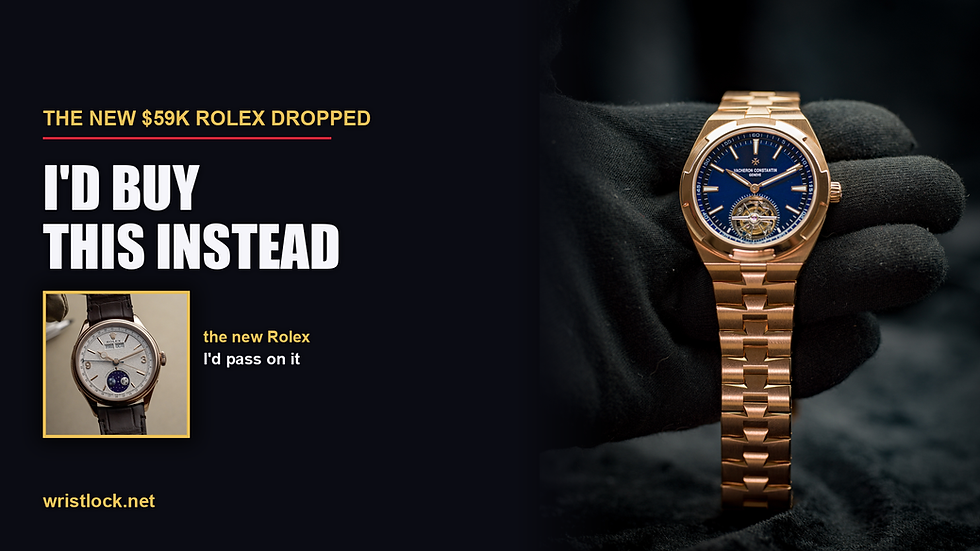
At this money you have stopped shopping only against other Rolex. You are up against Vacheron Constantin and Audemars Piguet, houses that were hand-finishing movements and dials before Rolex was born. For the same spend you can own a Vacheron or an AP with a depth of finishing the Daytona does not chase, worn by a fraction of the people.
Respect the watch, and still buy it with clear eyes about what the price is really for. Want the enamel Daytona because it moves you? Buy it and enjoy the hell out of it. Want it because you think it is the smart-money play? Slow down, because the smart money at this level has a lot of doors open to it.
The bottom line
This is a genuinely special Daytona. The enamel is the real deal and Rolex earned its credit for making it. It is also priced for its scarcity as much as its craft, and landing one means playing a game most buyers lose at the boutique. Know which of those you are paying for before you chase it.
Want one sourced straight, or an honest answer on what any Daytona is actually worth before you buy? Hit the form at wristlock.net. I will tell you what I would pay, not what it is listed for.


Comments